
FinGuard AI
Compliance system built with LangGraph-based multi-agent orchestration, a FastAPI backend, and a Next.js interface. It performs contextual search over official documents to produce referenced answers for banking and labor law scenarios.


Overview
FinGuard AI is a multi-agent AI assistant I built to automate the complex compliance processes that banking and Human Resources departments face. The goal wasn't just document search; I wanted to create a digital specialist that produces context-appropriate, reliable, and auditable answers across constantly updated laws, company policies, and regulations.
Auditable, AI-powered compliance assistant that manages banking and HR compliance processes with a multi-agent RAG architecture.
The problem
Banking regulations and labor law processes involve a large number of documents, internal directives, and rules open to interpretation. Traditional search systems scan these documents superficially; standard chatbots, meanwhile, carry a hallucination risk in specific legal scenarios. What organizations need is a reliable decision support layer that doesn't merely match text but can read the meaning of a document and filter the rules.
System architecture
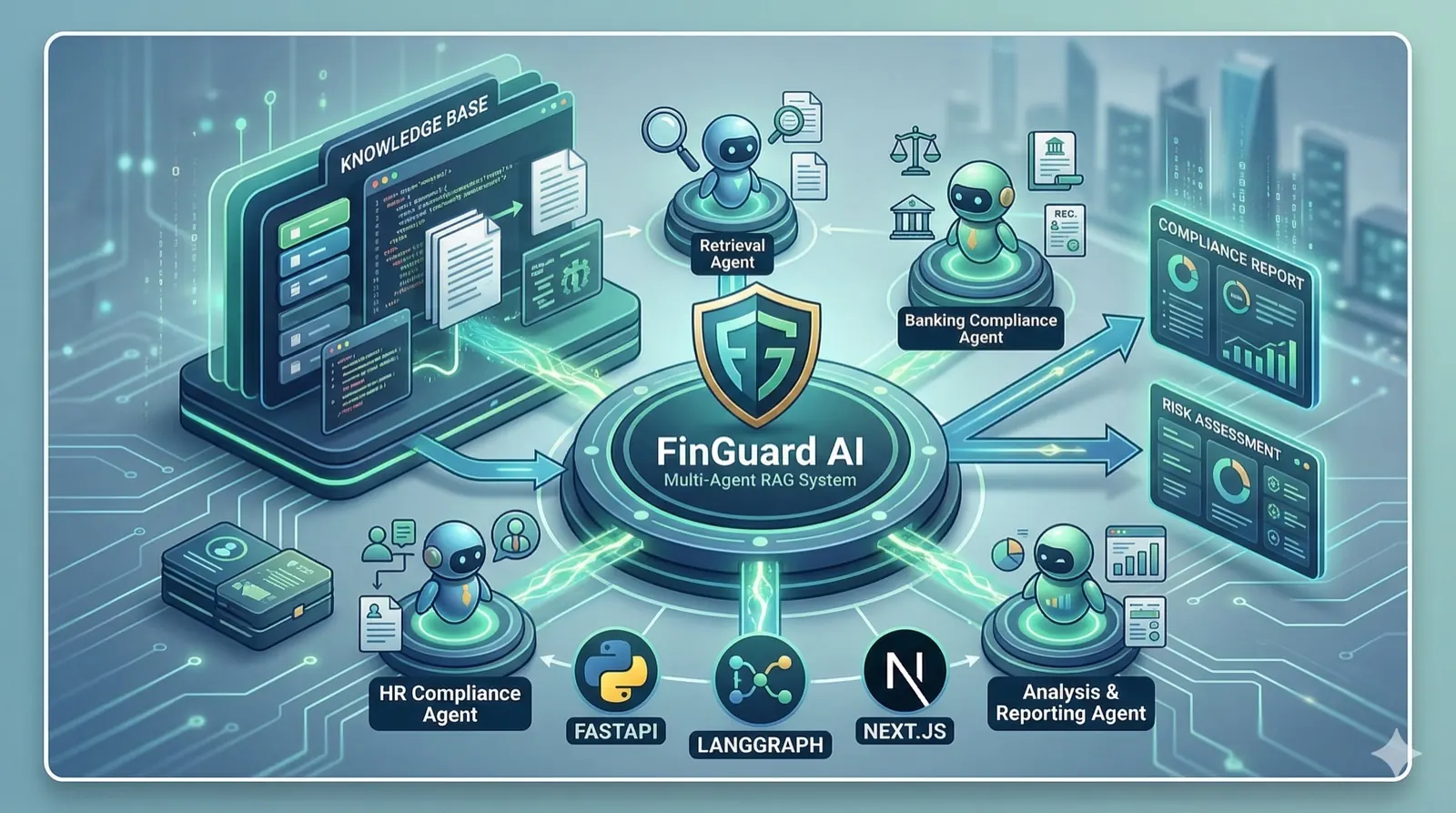
To solve this problem, I used Retrieval-Augmented Generation (RAG) together
with a LangGraph-based multi-agent architecture. Rather than having a single
large model try to do everything, I split the work across specialized agents.
- The
LangGraphlayer manages which agent a query goes to and the workflow between agents. FastAPIprovides a low-latency, reliable backend for inference and data access.Next.jsbuilds a modern web interface so the end user can manage complex processes more clearly.
Agent dynamics
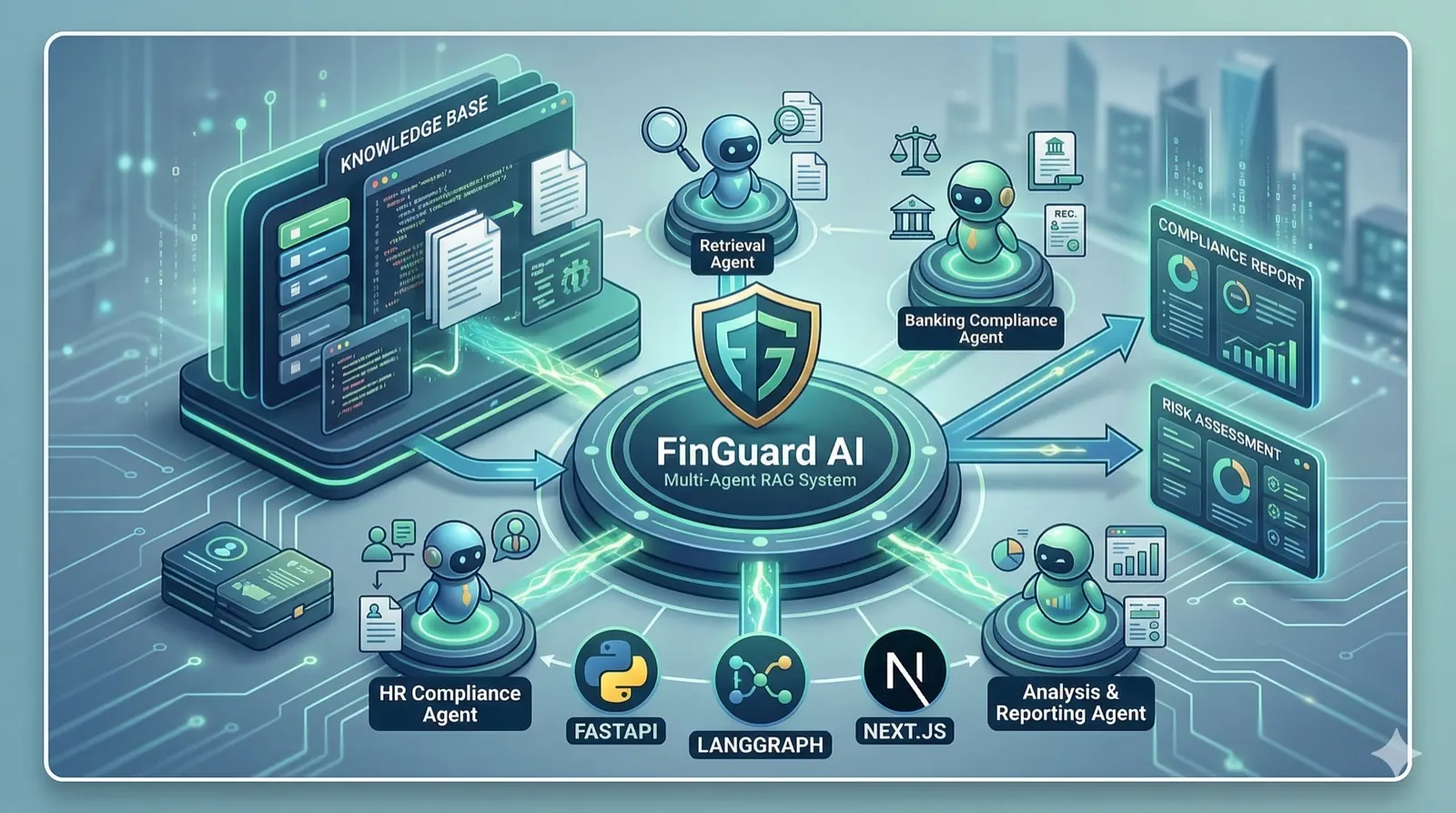
The agents inside FinGuard AI were designed as a team that works together rather than as a single model.
- The
Router Agentdistinguishes whether an incoming question concerns banking regulations or labor law / HR processes. - The
Retrieval Agentpulls only the most relevant documents, clauses, and internal directive fragments from the knowledge base. - The
Compliance Agentsanalyze the retrieved data, interpret it from a banking and HR perspective, and then produce a report-ready output for the user.
Thanks to this approach, the system operates with specialized workflow logic rather than general-purpose chat.
Why it matters
The real value of FinGuard AI is that it shortens the compliance review time within an organization while reducing the risk of misinterpretation. Grounding answers in official documents makes the output more auditable and defensible. At the same time, the modular architecture allows new regulatory domains to be added to the system on an agent-by-agent basis in the future.
Conclusion
In the end, FinGuard AI moved beyond a document search and Q&A layer to become a digital compliance teammate for banking and HR teams. It positions itself as a decision support system that reduces the burden of reviewing legal texts, can interpret with sensitivity to context, and reliably draws on the internal knowledge base.
Highlights
Technical Architecture
AICredit
AI-powered decision support system that brings credit risk scoring, model analytics, and scenario simulation into a single dashboard product.
Decision Support Platform